Why This Matters
During university, I lived with doctors. When I asked how much they learned about nutrition—the thing that literally fuels our bodies—the answer was one module. That stuck with me.
It's not that information doesn't exist. It's that the signal gets completely lost in the noise. Contradicting studies. Influencer diets. Marketing dressed up as science. Most of us are just guessing about something that affects how we feel every single day.
What We're Building
I'm not a nutritionist—I'm someone who got frustrated with how hard it is to understand what we eat. So I built Nutrons to synthesize harmonized data from European nutritional databases (Danish, UK, Swiss, and PhenolExplorer) into something that actually makes sense.
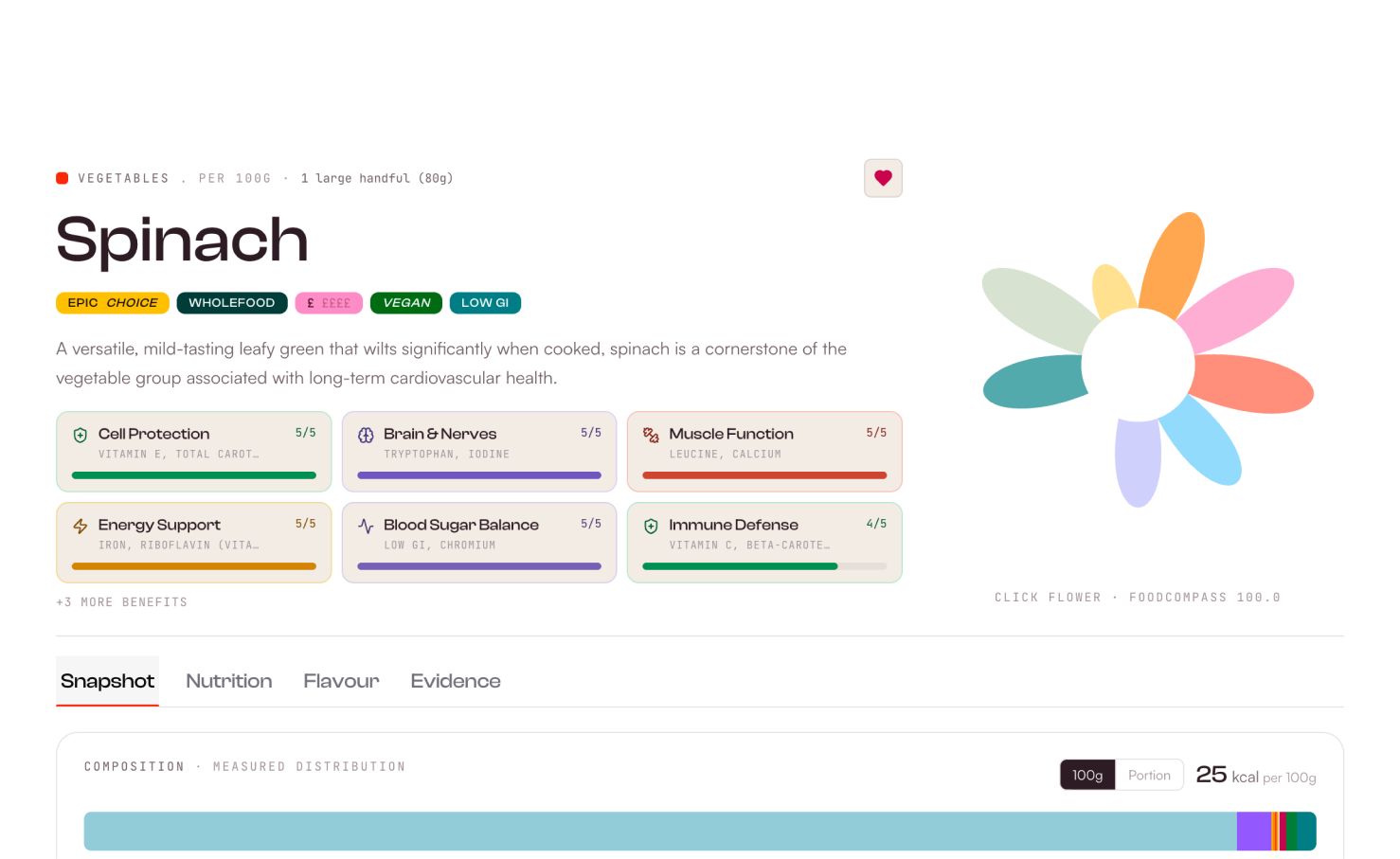
We've adapted FoodCompass 2.0's scoring methodology and created a flower visualization where each petal represents a different nutritional dimension. The goal is to turn overwhelming complexity into clarity—data into meaning you can actually use.
AI helps us process and surface patterns in the research, but AI is just a tool. That's why we're working toward integrating expert knowledge from nutritionists and researchers. We're building infrastructure to connect computational power with human expertise.
Loading a random ingredient…
How It's Different
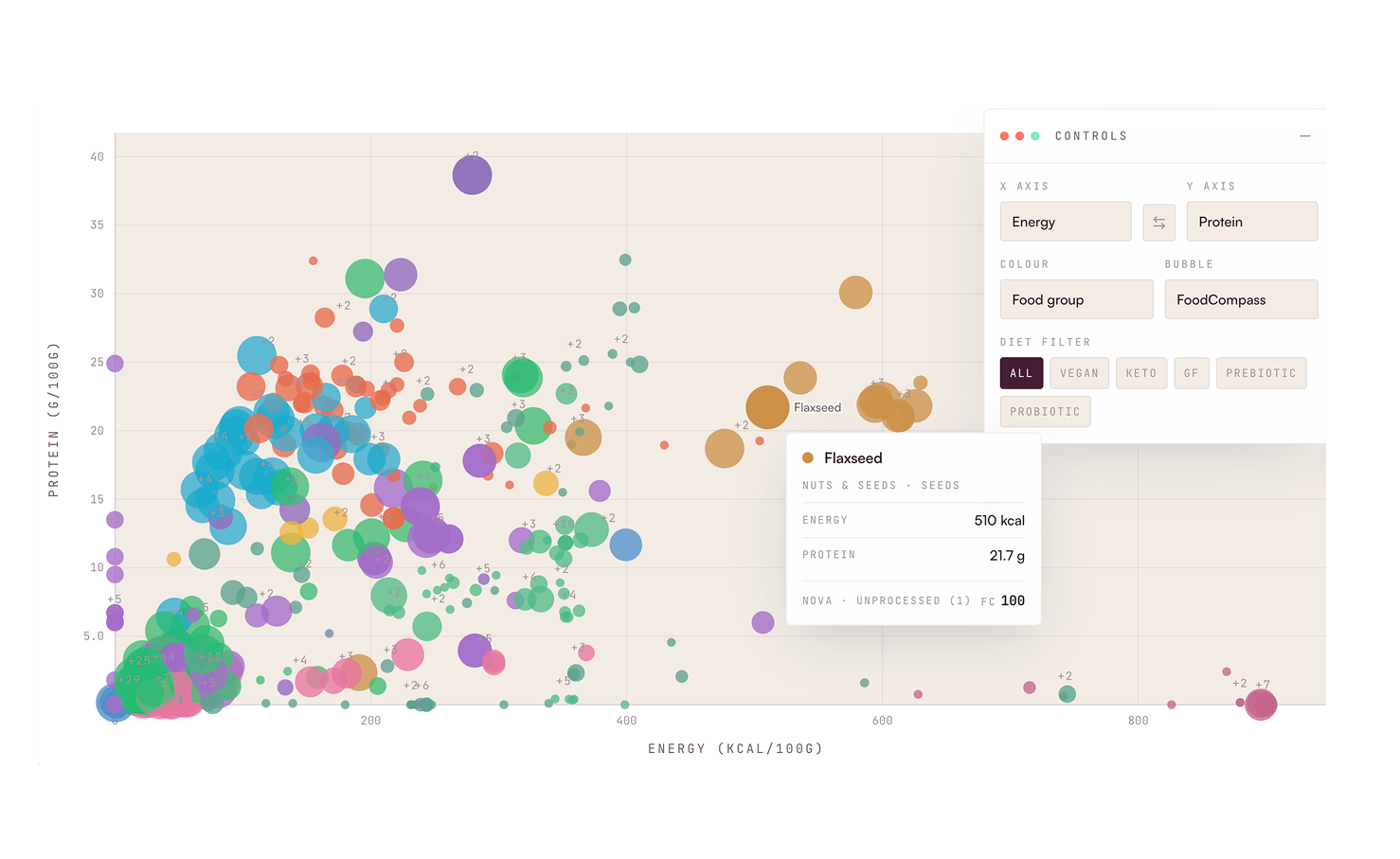
Most apps focus heavily on macros—protein, carbs, fat. Those matter, but so do micronutrients and polyphenols. Emerging research keeps pointing to their importance, yet they're invisible in most tracking tools.
Nutrons treats them as equally important. We're trying to connect the dots between macros, micros, and phytonutrients—giving you a fuller picture of what food actually does, not just part of it.
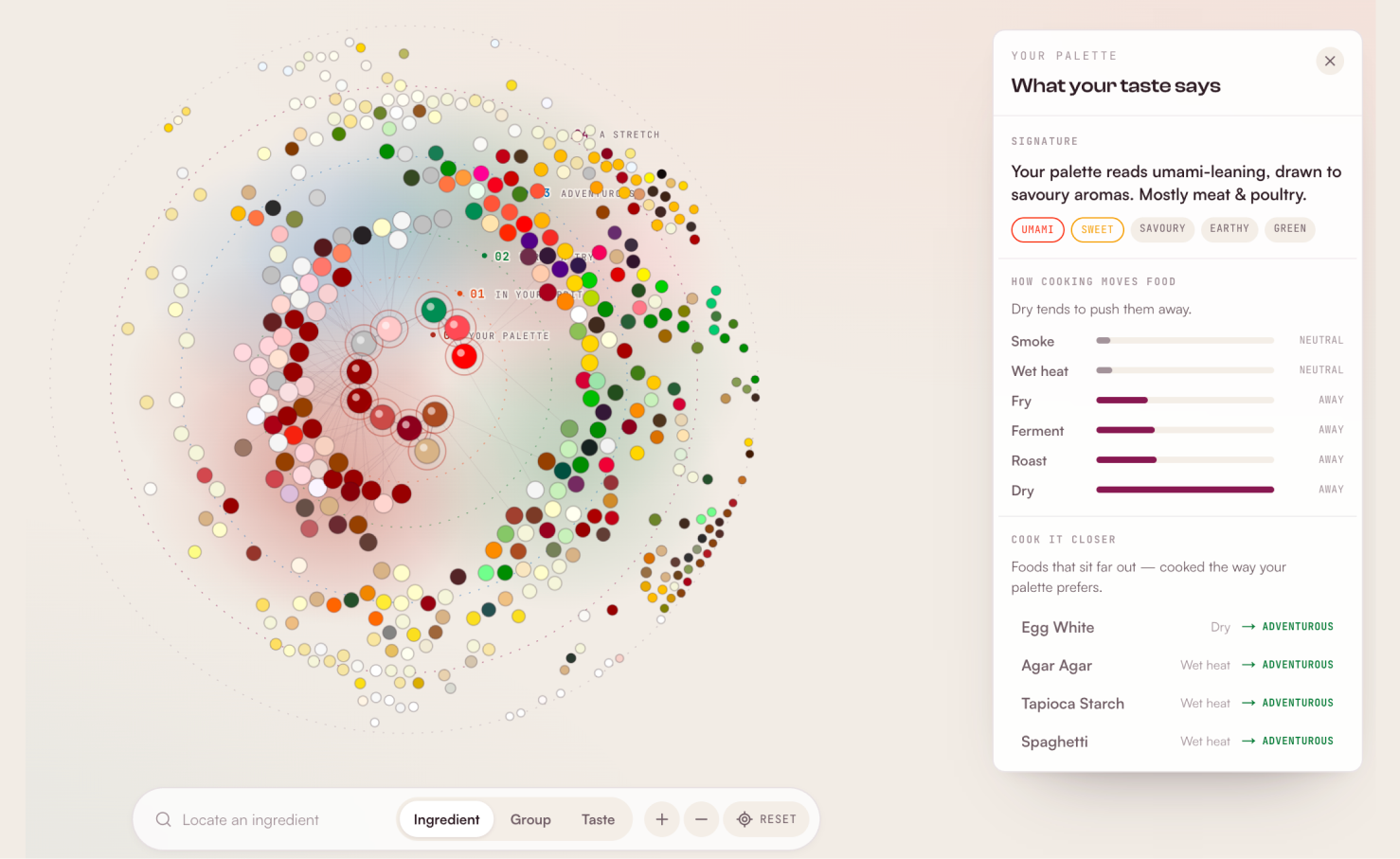
But here's the thing: nutritional density means nothing if you won't eat it. We surface flavor profiles, texture, and sensory characteristics alongside nutrition. Because understanding the tradeoff—what you gain nutritionally versus what you experience taste-wise—helps you make choices that stick. We're giving you tools to think with, not rules to follow.
Where We're Going
I believe in home cooking and having the support to do it well. When you understand what ingredients actually bring to your plate—vitamins, minerals, antioxidants, flavor—you can make better decisions without feeling like you're following someone else's diet plan.
We're not here to prescribe anything. We're trying to help you spot correlations between what you eat and how you feel. Over time, you learn what works for you. Not through restriction or perfection, but through having better information.
The idea is simple: show the full picture and let people decide for themselves. Nutritional density, flavor, texture, the real tradeoffs. Give people actual transparency instead of marketing claims, and they can make choices that work for their life.
Important: We don't provide medical or health advice. We're building tools to help you understand nutritional data better. Your health decisions should involve healthcare professionals—we're just trying to make the information less confusing.